
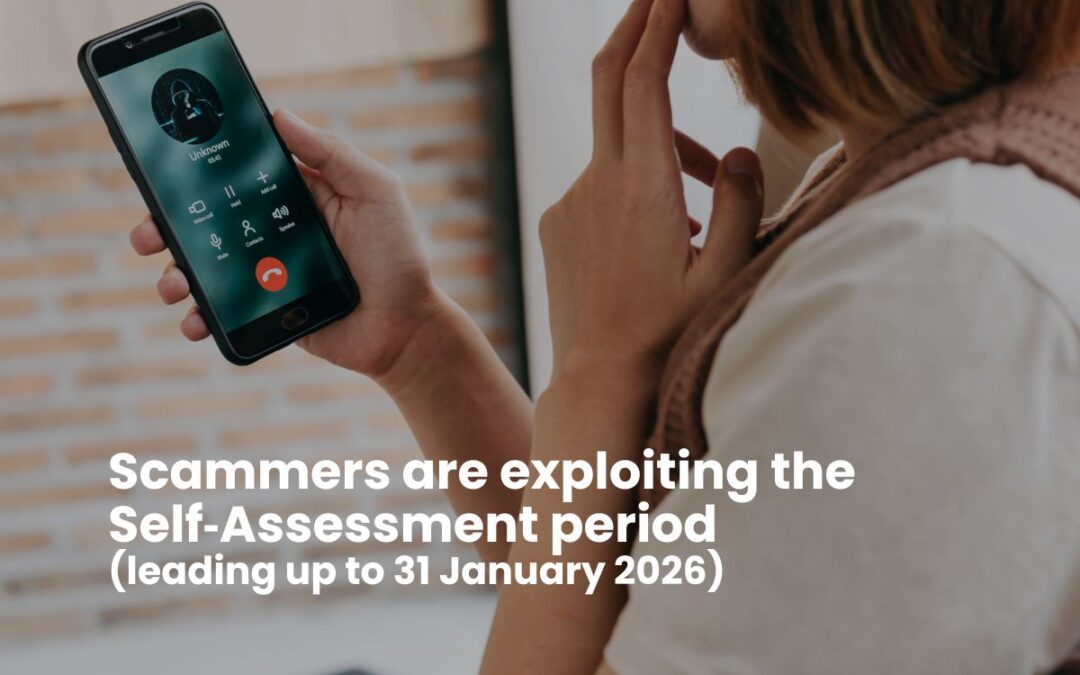
HMRC reports that more than 170,000 scam referrals were made in the year up to 31 July 2025, despite a 12% decline, over 47,000 involved bogus tax refund claims. Fraudsters are exploiting the Self‑Assessment period (leading up to 31 January 2026), using emails, texts, and calls that impersonate HMRC to steal your personal and banking information.
In response, HMRC has issued strong guidance on how to spot scams and encouraged taxpayers to file early via secure channels. Here’s a breakdown of the risks, how to protect yourself, and how we at WBV can help you stay safe.
Scam Tactics to Watch
There are some clear signs a communication is not legitimately from the tax office. HMRC will never:
- leave voicemails threatening legal action or arrest.
- ask for personal or financial information via text message or email.
- contact customers by email, text, or phone to inform them about a refund or ask them to claim one.
How to Protect Yourself
- File early, so you’re not rushed or stressed near the deadline.
- Use official platforms only: Manage refunds and communications via your HMRC online account or the secure HMRC app.
- Never share sensitive information, even if the person seems legitimate.
- Verify before you act: Instead of clicking suspicious links or trusting caller ID, go directly to GOV.UK or log into your HMRC account manually.
- Use strong, unique passwords and stay alert to unsolicited messages, especially those that create panic or urgency.
Reporting Scams
| Action | Send to |
| Suspicious email | phishing@hmrc.gov.uk |
| Suspicious text (claiming to be HMRC) | Forward to 60599 |
| Scam phone call | Report via GOV.UK |
Last year the Government launched its national campaign ‘Stop! Think Fraud!’. Backed by law enforcement, tech, banking, telecoms and third-party organisations, the campaign offers practical advice at Stop! Think Fraud – How to stay safe from scams.
If You’ve Already Shared Information or Lost Money
If you think you may have fallen victim to a scam, don’t panic but act quickly:
- Contact your bank immediately. They can put security measures in place, help recover funds if possible, and stop further fraudulent transactions.
- Report it to Action Fraud, the UK’s national reporting centre for fraud and cybercrime, at actionfraud.police.uk or by calling 0300 123 2040. This ensures your case is logged and investigated, and it helps protect others from being targeted.
- Still report to HMRC, even if you’ve already contacted your bank or Action Fraud. This allows HMRC to track scam patterns and shut down criminal websites and phone lines more quickly.
Taking immediate action can make all the difference in limiting the damage and stopping fraudsters from striking again.
How WBV Can Help
We know how stressful the Self-Assessment period can be, especially with scammers adding to the pressure. That’s why we’re here to do more than just complete your tax return:
- We’ll verify suspicious communications: If you receive a call, text, or email that doesn’t feel right, send it our way, we’ll help you check whether it’s genuine before you act.
- We ensure your filing is secure and timely: By preparing your return early and using official HMRC channels, we reduce the risk of last-minute stress or being misled by fraudsters.
- We keep you updated: Our team monitors HMRC announcements and industry alerts so you’re always aware of the latest scams and how to avoid them.
- We’re only a phone call away: Whether you need reassurance or quick guidance, our team are here to give you peace of mind throughout the process.
Conclusion
The Self-Assessment deadline is already a stressful time for many taxpayers, and scammers are taking advantage of that pressure. By staying alert, filing early, and only using HMRC’s official channels, you can avoid falling victim to scams. If something doesn’t feel right, pause and double-check before you act, and remember to report anything suspicious to HMRC, your bank, and Action Fraud.
Don’t Forget the Filing Deadline
For the current tax year (6 April 2024 to 5 April 2025), your online return must be filed and any tax due paid by midnight on 31 January 2026.
Key dates to keep in mind:
- 5 April 2025 – end of the tax year.
- 31 October 2025 – paper tax return deadline.
- 31 January 2026 – online return and payment deadline.
Filing early gives you peace of mind, ensures accuracy, and helps you avoid being caught off-guard by scammers trying to exploit the deadline pressure.
If you’re unsure about a message claiming to be from HMRC, or you just want peace of mind with your Self-Assessment, get in touch with us today. We’ll keep your tax return secure, on time, and scam-free.
Further help and reading:
HMRC phishing and scams: detailed information – GOV.UK
Download the HMRC app – GOV.UK
Recent Comments