
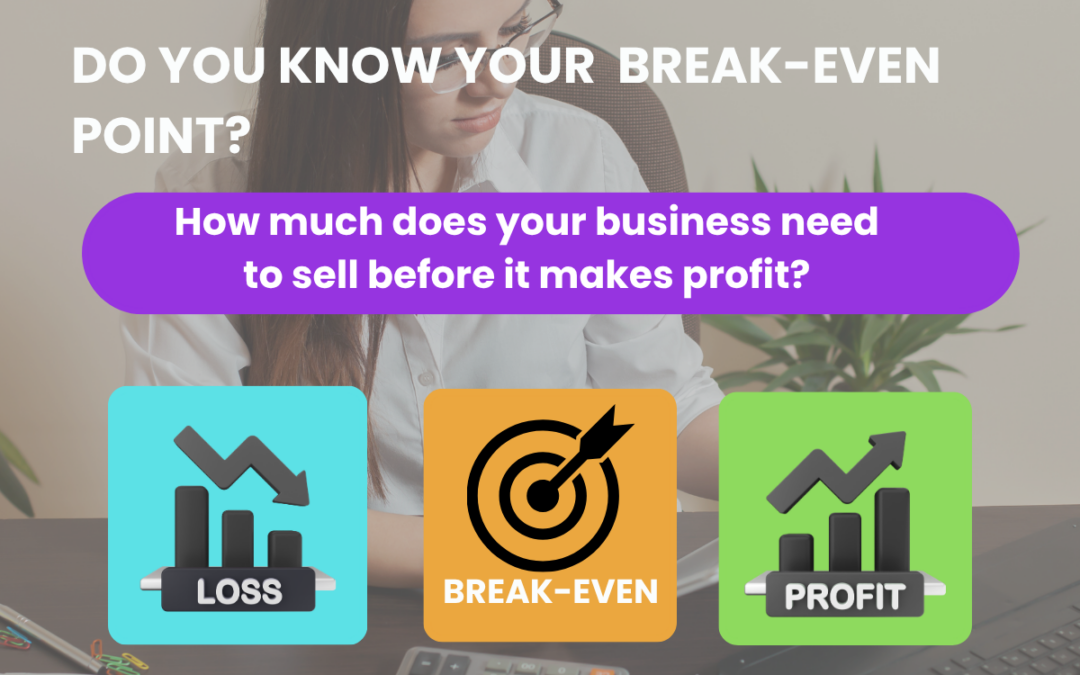
How much does your business need to sell before it starts making a profit?
It’s a simple question, but many business owners don’t know the answer.
You might know your annual turnover, your monthly expenses and how much is sitting in the bank, but knowing your break-even point can give you a much clearer idea of what your business needs to achieve.
What is a break-even point?
Your break-even point is the point at which your business has covered all of its costs but hasn’t yet made a profit.
Anything you earn above that point can then contribute towards your profit.
For example, if your business needs to generate £5,000 a month to cover all of its costs, your break-even point is £5,000.
Below that figure, you’re making a loss.
At £5,000, you’re breaking even.
Above £5,000, you’re making a profit.
What costs need to be included?
To work out your break-even point, you need to understand the costs involved in running your business.
These can include fixed costs, such as:
- Rent
- Insurance
- Salaries
- Software subscriptions
- Accountancy fees
- Utilities
And variable costs, which can change depending on how much you sell, such as:
- Materials
- Stock
- Packaging
- Delivery costs
- Subcontractors
Understanding the difference between these costs is important when calculating your break-even point.
A simple example
Imagine a business has fixed costs of £4,000 a month.
It sells a product for £100, with £40 of direct costs attached to each sale.
That leaves £60 per sale to contribute towards the business’s fixed costs.
The business therefore needs to make around 67 sales a month to cover its costs.
That’s its approximate break-even point.
Once it sells more than that, it starts generating a profit.
The figures will obviously be different for every business, but the principle is the same.
Why does your break-even point matter?
Knowing your break-even point can help you make better decisions.
It can help you understand:
How much do we need to sell each month?
Instead of setting an arbitrary sales target, you have a figure based on what your business actually needs.
Can we afford to take on another employee?
Adding a new member of staff increases your costs. Understanding your break-even point can help you assess whether the additional revenue is likely to justify that cost.
Do we need to review our prices?
If your costs have increased, your break-even point may have increased too.
Can we afford to invest in the business?
Whether you’re considering new equipment, premises or additional staff, understanding your current costs gives you a better starting point for making the decision.
Your break-even point can change
Your break-even point isn’t a figure you calculate once and forget about.
It can change when your business changes.
For example, your break-even point could increase if:
- Your rent increases
- You employ more staff
- Supplier costs rise
- You take on new premises
- You add new software or services
- Your insurance costs increase
Equally, reducing costs or improving your margins could lower your break-even point.
That’s why it’s worth reviewing your figures regularly.
Break-even isn’t the same as a profit target
It’s also important to remember that breaking even isn’t the goal.
Your break-even point simply tells you what your business needs to generate to cover its costs.
You then need to consider how much profit you want the business to make on top of that.
For example, if your business needs £5,000 a month to break even, your target shouldn’t necessarily be £5,000.
You may need to generate considerably more to provide a worthwhile profit and allow the business to grow.
Do you know yours?
Understanding your break-even point gives you another useful way of looking at your business.
Instead of simply asking:
“How much did we sell?”
you can ask:
“How much did we need to sell and how far above that are we?”
That can give you a much clearer picture of how your business is performing.
At WBV Accountants, we can help you understand your costs, margins and profitability, so you can make informed decisions about your business.
Knowing your numbers isn’t just about filing your accounts. It’s about knowing what they mean.
Recent Comments